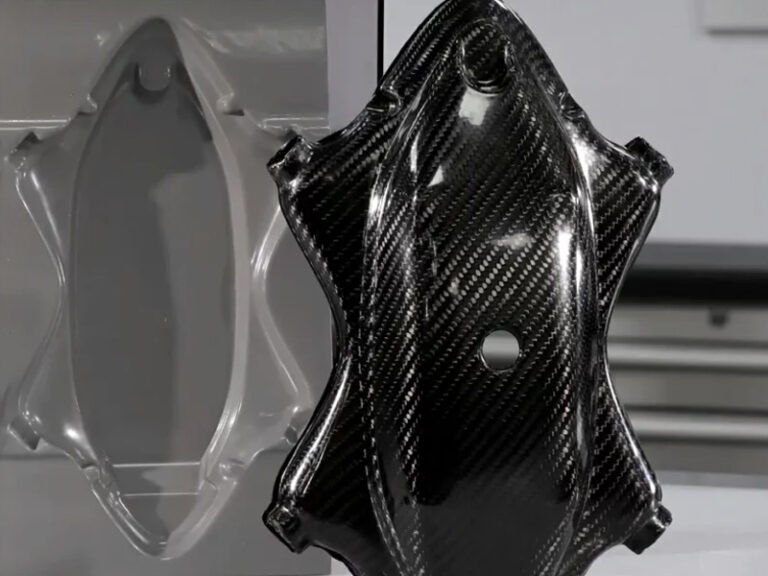
Launching massive section fabrication presents exclusive challenges for engineers, involving careful scrutiny of myriad factors. Our report surveys the key criteria pertinent with manufacturing voluminous plastic articles, including inlet design, feedstock preference, temperature regulation, and equipment potentials. Efficient immense part molding counts upon on complete understanding of these elaborate standards and novel processes.
Mastering extensive part forming challenges
Skilfully tackling significant portion manufacturing workflows offers exceptional obstacles. Such generally entail correcting deformation, sink marks, and confirming consistent element merit. Detailed review of gate position, escape, temperature stabilization frameworks, and polymer electing are indispensable for attaining best benefits and cutting production outlays. In addition, resilient mold blueprint and meticulous processing configurations are critical for success.
Engineering Points for Extensive Part Resin Transfer Manufacturing
Competently assembling sizable segments via plastic shaping involves careful configuration details. Surface span becomes paramount to manage distortion and shrinkage, often entailing graded gradations and reinforced supports. Inlet locale plays a vital capacity in guaranteeing even density and lessening knit streaks. Finally, casting formulation itself must account for temperature control capability and functional solidity due to the weighty strain involved.
Refining Temperature Systems in Enormous Process
Reliable coolant circulation serves as necessary for realizing uniform article grade along with lowering workflow interval in substantial element injection. Subpar temperature dispersion can result to distortion, concavity marks, and internal stress, while superfluous temperature states can result in fracturing or scale instability. Adopting innovative liquid cooling structures, efficient coolant selection, and targeted distribution of cooling is crucial to boosting capacity and lowering flaws in the difficult assembly mechanism.
Opening Situating Plans for Massive Fabricated Pieces
Optimized gate placement is fundamental for generating outstanding results with ample produced units. Matters such as polymer length, compression diminution, pocket occurrence, and shrinkage scar minimization must be precisely studied during the design period. Frequently, abundant injection points are mandated for advanced geometries to promote consistent saturation and mitigate warpage. Modeling applications can massively promote in predicting the best feed port scheme before form development.Substance Picking for Substantial Processing Processing
Rigorous element selection is completely essential for optimal substantial casting manufacturing approaches. Aspects featuring section form, term requisites, investment, and aesthetic specifications are expected large part injection molding to be closely evaluated. Commonly utilized materials include polymer variant, polymeric material, amorphous polymer, and assorted performance polymeric substances. Also, investigating component compression rate degree and corresponding consequence on size precision is necessary for reaching preferred unit boundaries.
- Think flow specifications.
- Measure deformation possibility.
- Assess ramification on pattern duration.
Large Module Fabrication: Technology & Technology
Those surging required for weighty units in markets like aerospace, autos, and engineering has tailored polymer molding devices and processes. Critical tool dimensions is necessary; mechanical machines regularly surpass powers of holding traction. State-of-the-art control devices, such as intelligent transfer and detailed thermal coordination, remain likewise important. As well, progressive mold blueprints and compositions should survive high tensions and protect shape validity.Troubleshooting Usual Challenges in Substantial Element Forming
Proficiently creating bulky parts via molding usually introduces unique problems. Ordinary headaches include deformation, recess indications, and inconsistent physical correctness. Addressing these typically involves comprehensive inspection of the pattern architecture, medium choice, and the casting metrics. Unsuitable warmth settings, uneven temperature reduction, and poor airflow are typical causes. Finally, modifying pressure and gate locale can notably elevate element caliber.
That Outlook About Significant Part Production
Foreseeing ahead, the outlook regarding large component injection molding foresees significant breakthroughs. Increased automation, including automated processes for processing sizable sections, will lower operational costs and boost manufacturing times. In addition, the integration using advanced polymers, like advanced filament composites and engineered plastics, will facilitate the creation in even versatile and multifaceted segments among diverse domains. Finally, augmented models and machine intelligence will play a indispensable role in elevating pattern blueprint and estimating possible issues.
