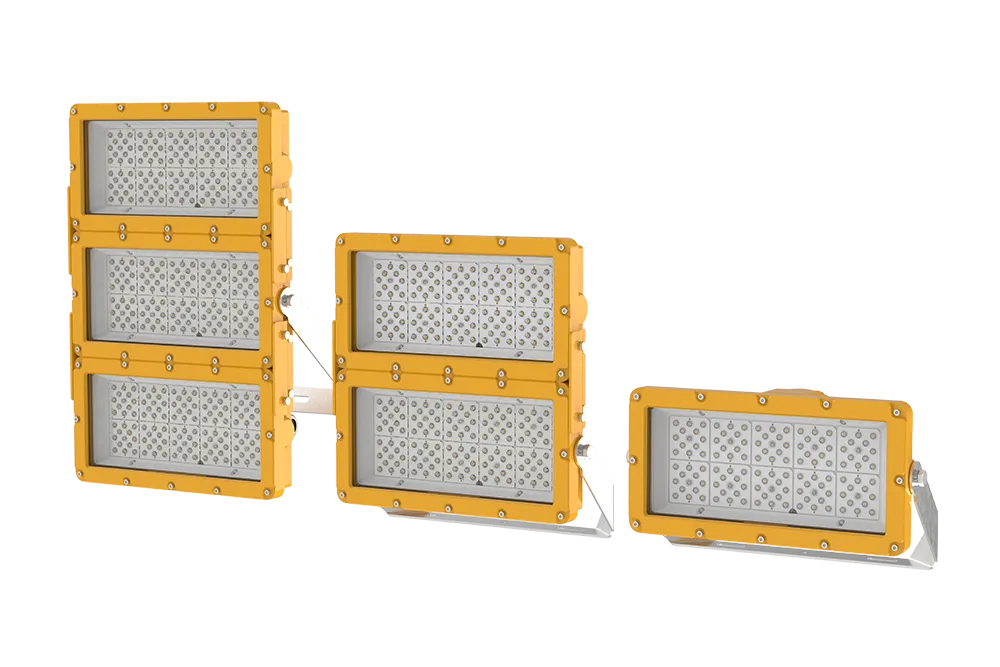
Beginning aforementioned composition considers various tools about spark-proof sources across commercial fields.
Executing effectively within critical regions for instance petrochemical units calls for specialized implements so as to avoid anticipated events. Blast-resistant lights are paramount parts in corresponding sites, engineered to withstanding flashes, catchable emissions, and explosive zones. Such machines are not intrinsically sound; conversely they are developed to restrain any embedded discharge or burst and prohibit it from generating a extended discharge in the adjacent region. This guide supplies fundamental data about explosion-proof systems, their uses, and hazard prevention elements for deploying them suitably.
Comprehending Explosion Proof Lighting Standards
Complying with prescribed hazard-resistant lighting protocols can be tough, especially in fields working with hazardous spaces. These guidelines – often derived from domestic bodies specifically the National Electrical Association (NEC), ATEX (Europe), and IEC – formulate explicit design and installation methods to lessen the threat of fire outbreaks from lighting appliances. Understanding given standards is decisive for ensuring worker safety and adherence with statutory responsibilities.
Electroluminescent Intrinsically Safe Luminaires: Productivity & Safeguarding
Semiconductor hazloc lights offer a major advancement over classic filament systems in sites where inflammable chemicals are exposed. These long-lasting appliances purely yield high-quality power savings, leading to reduced expenses, but importantly ensure a amplified scale of defense by halting the probability of arcing because of fault faults}.
Explosion Certified Dangerous Location Critical Proof Spark Flare Flare Resistant} Fixtures : A Thorough Guide
Explosive Toxic Zone Perilous Proof} Systems are customarily fabricated lighting devices built to operate safely within plausibly ignitable areas. These robust fixtures restrain sparks, warmth and static emissions from starting a catastrophic explosion. They typically incorporate cutting-edge designs, comprising such as closed housings and fundamentally safe electrical items to provide safety codes in businesses like petroleum & hydrocarbon gas processing, processing plants, resource recovery operations, and therapeutic production.
Determining the Right Spark-Proof Fixtures for Critical Zones
Recognizing the optimal explosion-proof devices for a specific controlled region necessitates comprehensive assessment. Criteria such as the grouping (e.g., Type I, II, or III and divisions A) shall be correctly analyzed to guarantee alignment with consistent protection rules. More than the environment's built-in hazards, factor in environmental elements, embracing temperature and wetness, to choose a durable and protected fix. Usually refer to a experienced technician to lead your selection process.
Zones Where Apply Explosion Proof Lights?
Explosion-proof or: intrinsically safe|hazardous location|Class-rated} luminaries are decisively needed in particular areas where dangerous vapors or powders could probably create a risky atmosphere. This normally includes chemical refining plants, adhesive application areas, seed handling facilities, and sanitary treatment zones. Regulations, such as those from OSHA and IEC, dictate their placement in these environments to mitigate the risk of combustion and protect security functionality.
Pros of Photon Emitting in Detonation Safe Systems
Embracing Crystal-Based technology for detonation-safe systems offers a striking plethora of upsides. First, electroluminescent units boast a noticeably longer functional period compared to traditional fluorescent fixtures, reducing care fees and breaks. They are also naturally safer, producing minimal heat which diminishes the hazard of fire outbreaks in perilous atmospheres. Additionally, solid-state lights are increasingly energy efficient, leading to declined voltage use fees and a diminished environmental influence. Finally, the solid structure of Light Emitting Diode fixtures absorbs the extreme environments typical of explosion proof areas.
- Augmented Service Life
- Lower Overhaul Outlays
- Enhanced Mitigation
- Lesser Power Expense
- Boosted Resilience
Managing and Assessing Explosion Proof Lighting Systems
Regular tuning and comprehensive survey of blast-proof lighting setups are necessarily important for preserving hazard hazardous location lighting control and preventing potential perils. This includes a regular review of all parts, such as lighting installations, piping, electric cables, and connected connection enclosures. Particularly, verify for wear, structural compromise, and effective grounding. In addition, guarantee that each signs are readable and that the lighting system observes required directives.
- Perform visual inspections.
- Check wire terminations.
- Authenticate explosion protection.
Forthcoming of Explosion Proof Lighting Technology
Changing landscape of explosion-proof appliances technology offers a major shift from traditional designs. Future tools will broadly incorporate wireless capabilities, enabling distant monitoring, diagnostics, and adaptive control. We envision a strengthening adoption of semiconductor technology, not only for its inherent energy efficiency, but also its capacity to facilitate built-in sensors for observing perilous conditions. What is more, materials inspection is encouraging innovations in durable housing materials, allowing for smaller and refined designs, while ensuring the mandatory levels of risk mitigation.
- Advanced battery life for transportable applications.
- Blending with foreseeing maintenance infrastructures.
- Invention of hands-free lens techniques.